
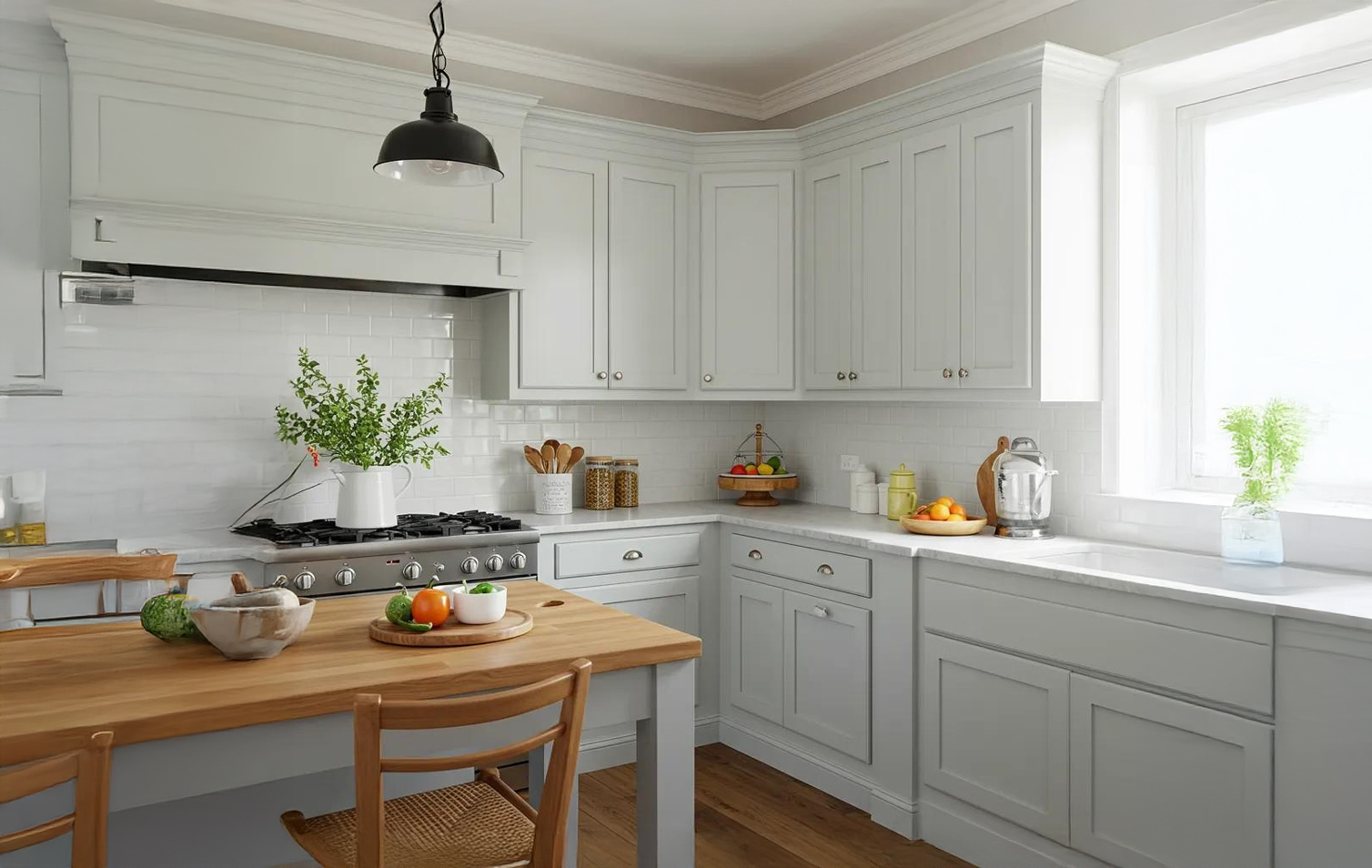
Why Hiring a Professional Kitchen Cabinet Painter Is Better Than Doing It Yourself
Are uneven brush strokes, drips, and premature peeling jeopardizing your kitchen’s visual appeal? Tackling kitchen cabinets without expert support often leads to hidden costs, time overruns, and finish failures, erasing initial savings.
In this guide, you’ll discover the pitfalls of DIY cabinet painting, the precise methods professionals use for a factory-like finish, and how expert teams save you days of labor and deliver long-lasting results.
We’ll compare timelines, materials, and total investment, explore customization and color trends for 2025, and explain why partnering with a trusted kitchen cabinet painting service transforms your space with minimal hassle.
What Are the Common Problems with DIY Kitchen Cabinet Painting?
DIY cabinet painting projects promise budget savings and creative control, but they frequently falter due to technical and logistical missteps. Homeowners attempting this task often underestimate the precision required for surface preparation, spray application, and curing conditions. Recognizing these challenges highlights why professional services deliver superior, lasting finishes that protect your investment.
The Pros and Cons of DIY Cabinet Painting
Professional cabinet painting typically results in a more durable and longer-lasting finish compared to DIY efforts. This is attributed to professionals using high-quality primers, paints, and specialized techniques, which are crucial for achieving a finish that withstands daily wear and tear.
This citation reinforces the article’s argument that professional services deliver superior, lasting finishes due to their expertise and materials.
What DIY Mistakes Lead to Poor Cabinet Finishes?

Inexperienced painters tend to skip critical steps or apply shortcuts that compromise coverage and durability. Before reviewing each error, note that poor technique directly undermines smoothness, uniformity, and adhesion.
- Skipping primer application weakens paint bond and exposes raw wood to moisture.
- Overloading brushes and rollers causes visible drips, brush marks, and uneven texture.
- Inconsistent spray settings leave patchy coverage and orange peel effects.
- Neglecting hardware removal leads to paint build-up around hinges and handles.
8 DIY Cabinet Painting Mistakes
Common DIY cabinet painting errors, such as skipping crucial preparation steps like cleaning and sanding, using cheap paints, or neglecting proper priming, often lead to poor adhesion, uneven finishes, and premature chipping or peeling. Proper surface preparation is essential for paint durability.
This supports the article’s section on common DIY pitfalls and the critical role of meticulous preparation and quality materials in achieving a successful cabinet finish.
These missteps not only diminish the finished look but also set the stage for cracking and peeling under regular kitchen traffic, steering us toward the impact of inadequate preparation.
How Does Inadequate Preparation Affect DIY Results?
Surface preparation is the foundation of any durable finish. Failing to clean, sand, and prime properly leaves contaminants and rough spots that hinder adhesion.
| Step | DIY Shortcoming | Professional Standard |
|---|---|---|
| Cleaning | Wipe with a damp cloth only | Degrease with trisodium phosphate |
| Sanding | Random sanding grit or skip sanding | Systematic progression from 120 to 220 grit |
| Filler Repair | Use general wood filler without sanding | Wood putty plus feathered sanding |
| Priming | One-coat primer or self-priming paint | Two-coat adhesion primer |
Even the best paints fail without a uniform, contaminant-free base, which explains why peeled or chipped surfaces commonly follow overlooked prep tasks.
Why Do DIY Paint Jobs Often Peel or Chip Prematurely?
Peeling and chipping occur when paint layers detach under stress from moisture, heat, or mechanical impact. Without specialized adhesion promoters and correct curing conditions, the bond between coat layers and substrate remains weak.
- Moisture infiltration from kitchen steam breaks primer adhesion.
- Thermal expansion from cooking heat creates micro-cracks.
- Everyday use and cleaning abrade insufficiently hardened surfaces.
- Lack of sealers or topcoats leaves edges vulnerable to wear.
Understanding these failure modes reveals why professionals incorporate adhesion tests, moisture barriers, and post-cure inspections for lasting protection.
What Tools and Materials Are Usually Lacking in DIY Projects?
Consumer-grade equipment and paints limit consistency and coverage compared to commercial-level solutions. Reviewed below are the gaps that professionals fill with superior resources.
- Airless Sprayers instead of handheld HVLP spray guns, granting fine atomization without overspray.
- Commercial-grade primers and sealers with rust inhibitors and adhesion enhancers.
- Precision sanding blocks and multi-step abrasives for glass-smooth surfaces.
- Temperature- and humidity-controlled booths that guarantee optimal drying and curing conditions.
When you compare these toolsets to typical hardware-store purchases, it’s clear why pros achieve seamless finishes and DIYers struggle with uneven layers, prompting a look at professional processes.
How Do Professional Painters Achieve a Flawless and Durable Kitchen Cabinet Finish?
Professional teams blend advanced spray techniques, premium coatings, and rigorous quality controls to replicate factory finishes on site. Their systematic approach minimizes human error, ensures uniform layers, and maximizes longevity under daily kitchen use. By understanding each stage, you can see why professional results far outpace DIY attempts.
What Specialized Techniques Ensure a Factory-Like Finish?

Experts use spray application methods that deliver ultra-smooth, continuous coatings without brush marks:
- High-Volume Low-Pressure (HVLP) Spraying for controlled atomization and minimal overspray.
- Backrolling to even out any fine texture and seal edges.
- Wet-sand and buff between coats for mirror-smooth surfaces.
- Precision masking and edge-covering to protect glass, countertops, and hardware.
These steps produce a uniform film thickness and reflect light evenly across cabinet faces, creating the illusion of new cabinetry.
Which High-Quality Paints and Primers Do Professionals Use?
Commercial painters specify products formulated for adhesion, abrasion resistance, and color retention:
- Primer: Urethane-acrylic adhesion primer with corrosion inhibitors.
- Paint Base: Two-component polyurethane or acrylic enamel for superior hardness.
- Topcoat/Sealer: Water-based polyurethane for chemical and scratch resistance.
Unlike DIY formulations, these coatings cure chemically to form cross-linked polymers, granting resilience that outlasts everyday kitchen conditions by years.
Why Is Meticulous Surface Preparation Critical for Longevity?
Professional preparation addresses substrate stability, moisture control, and microscopic surface imperfections:
- Degreasing eliminates oils and food residues that repel primer.
- Sequential sanding removes old finish, smooths grain, and roughens the surface for mechanical bonding.
- Crack and gouge repair ensures seamless edges and prevents pinhole formation.
- Environment control replicates factory humidity and temperature for ideal curing.
This thorough groundwork establishes a permanent bond, preventing common failures like delamination and blistering under heated or humid conditions.
How Does Professional Paint Adhesion Prevent Peeling and Chipping?
Specialized adhesion promoters and testing protocols guarantee maximum bond strength:
| Adhesion Factor | DIY Approach | Professional Method |
|---|---|---|
| Bonding Agent | Self-priming painted surfaces | Multi-layer adhesion primer plus sealer |
| Curing Conditions | Ambient air drying | Controlled cure chamber with heat and airflow |
| Adhesion Testing | Visual inspection | Cross-cut adhesion tests and tape pulls |
| Edge Sealing | Brush-on edge coat | Sprayed wrap-around seal coat |
By rigorously testing each coat’s adhesion before proceeding, pros ensure that paint remains intact through daily wear, driving home their value proposition.
How Does Hiring Professionals Save Time and Effort Compared to DIY?
Enlisting skilled painters eliminates weeks of labor and uncertainty, replacing it with predictable schedules and turnkey service. Rather than juggling messy prep, paint mixing, and detail work, homeowners can focus on daily life while experts manage every step swiftly and systematically.
What Is the Typical Timeline for Professional Cabinet Painting?
| Phase | Professional Duration | Core Activities |
|---|---|---|
| Initial Assessment | 1 day | On-site measurement, color consultation |
| Preparation | 1–2 days | Degreasing, sanding, repair, masking |
| Priming and Inspection | 1 day | Primer coats, adhesion testing |
| Paint Application | 1–2 days | Multiple finish coats, wet sanding in between |
| Curing and Final Touches | 1 day | Controlled cure, hardware reinstallation |
This 5- to 7-day cycle stands in contrast to weeks of weekend work for DIYers, which often extends as mistakes require rework.
How Long Does a DIY Project Usually Take?
Most homeowners underestimate the total effort by more than 100%. A typical DIY timeline spans:
- Day 1–2: Cabinet removal, degreasing, and disassembly
- Day 3–5: Sanding and patching
- Day 6–7: Primer coats
- Day 8–10: Finish coats with dry times
- Day 11–14+: Rework touch-ups and hardware reinstallation
Unplanned delays in drying, recoat errors, or paint runs frequently add days or weeks, while professionals maintain a fixed completion date.
What Hassles Do Professionals Handle That DIYers Often Overlook?
- Material procurement and paint disposal according to regulations.
- Dust containment systems that protect adjacent rooms.
- Fine-detail cleanup, including hardware polishing and surface wipe-downs.
- Project coordination among subcontractors (cabinet installers, electricians).
By offloading these tasks, homeowners regain free time and avoid interruptions, leading directly into cost considerations.
What Are the Cost Differences Between Professional and DIY Kitchen Cabinet Painting?
While DIY may appear cheaper at first glance, unaccounted expenses and extended labor amplify overall costs. Professional quotes factor in quality materials, specialized equipment, and warranty coverage, delivering predictable investment and higher resale impact.
How Much Does Professional Kitchen Cabinet Painting Typically Cost?
Professional cabinet painting averages $2,500 to $6,000 for an average-size kitchen, depending on cabinet count, finish complexity, and geographic region.
| Option | Price Range | What’s Included |
|---|---|---|
| Basic Cabinet Painting | $2,000–$3,500 | Single-color finish, standard hardware restart |
| Premium Finish Package | $3,500–$5,000 | Two-tone design, glazed accents, topcoat |
| Full Custom Refinishing | $5,000–$6,500 | Custom finishes, color consultation, warranty |
Investing in professional services includes premium coatings, labor, and up to five-year warranty coverage—an offer unavailable in DIY scenarios.
What Hidden Costs Can DIY Projects Incur?
DIY endeavors accumulate expenses that often escape initial budgets:
- Material waste from incorrect color orders and test batches.
- Tool rental fees for sprayers, sanders, and dust control.
- Rework labor when coats fail adhesion or surfaces show flaws.
- Opportunity cost spent over weekends rather than on revenue-generating activities.
These hidden factors can double the out-of-pocket spend, nullifying the appeal of self-application.
How Does Professional Painting Increase Home Value?
A professionally refinished kitchen registers high on buyer checklists, boosting resale potential by up to 5–8% of home value. Cosmetic transformations that retain existing cabinetry save thousands over full replacement, delivering an average ROI of 70–80%. This financial impact underscores the strategic advantage of expert painting over DIY shortcuts.
The Kitchen Sells the Home
Research indicates that painting kitchen cabinets can significantly boost a home’s resale value, with some reports showing an average return on investment (ROI) of 75-80%. Studies by Zillow and Redfin suggest that homes with updated kitchens, including painted cabinets, can sell for 2% to 7% more.
This research directly supports the article’s claims about professional painting increasing home value and providing a strong ROI.
How Do Professionals Provide Expert Customization and Design for Kitchen Cabinets?
Professional painting services extend beyond brush strokes into design advising, color forecasting, and specialty finishes that align with modern trends. Collaborative color consultation and finishing techniques translate homeowner vision into cohesive kitchen aesthetics.
What Role Does Expert Color Consultation Play in Cabinet Painting?
Expert consultants apply color theory and spatial analysis to recommend palettes that complement lighting, countertop materials, and hardware finishes. By simulating shade variations under real kitchen lighting, they ensure the chosen hue remains consistent from sunrise to evening, avoiding costly repainting.
How Can Custom Finishes Enhance Kitchen Aesthetics?
Advanced finishing methods transform cabinets into design focal points:
- Distressing and antiquing for vintage charm.
- Glazing and shading to accentuate panel details.
- Two-tone layering that adds depth and contrast.
- Matte and eggshell textures to suit contemporary or farmhouse styles.
Custom finishes reflect personal style and integrate seamlessly with countertops, backsplashes, and flooring, shaping a unified kitchen environment.
What Are the Latest Kitchen Cabinet Color Trends for 2025?
Design forecasts for 2025 reveal a move toward expressive yet timeless tones that favor eco-friendly formulations:
- Deep Marine Blue – evokes coastal calm and pairs with brass hardware.
- Cinnamon Slate – warm earth tone that anchors natural wood accents.
- Soft Sage Green – promotes serenity and complements botanical motifs.
- Charcoal Matte – modern neutral that hides imperfections and contrasts light surfaces.
- Creamy Off-White – remains a classic choice for bright, airy kitchens.
These trends leverage commercial low-VOC paints that support indoor air quality, aligning aesthetic innovation with sustainability.
Why Choose TrustedPaintersLLC for Your Kitchen Cabinet Painting Needs?
When superior finish, reliability, and comprehensive service matter, partnering with TrustedPaintersLLC ensures every detail aligns with your vision. Our proven process, expert team, and customer-first philosophy differentiate us in a crowded field of conventional painters.
What Makes Our Team and Process Unique?
Our licensed specialists combine decades of focused cabinet painting experience with proprietary color-matching technology. Each project follows a step-by-step protocol:
- Consultation & 3D color preview
- Certified surface preparation
- Precision spraying in mobile paint booths
- Multi-stage quality inspections
This methodology delivers consistently flawless, factory-level outcomes.
How Do We Ensure Customer Satisfaction and Warranty Coverage?
Every cabinet painting contract includes a written workmanship warranty valid for three years, covering chipping, peeling, and color fade. Our dedicated project manager coordinates scheduling, progress updates, and final walkthroughs, guaranteeing clear communication and peace of mind throughout the engagement.
What Do Our Customers Say About Our Professional Cabinet Painting?
Homeowners highlight our attention to detail, on-time completion, and spotless cleanup as standout benefits. Verified testimonials praise the near-factory quality finish and personalized design guidance that elevated their kitchens without the stress of DIY trials.
What Are the Long-Term Benefits of Professional Kitchen Cabinet Painting?
Investing in expert cabinet refinishing yields rewards well beyond immediate aesthetics. Durable finishes, structured maintenance plans, and robust warranties ensure your kitchen stays refreshed for years, safeguarding both style and value.
How Long Does a Professional Paint Job Last Compared to DIY?
A professional cabinet repaint, when carried out with commercial coatings and proper curing, typically endures 8–12 years before requiring touch-ups. DIY finishes often degrade after 2–3 years under normal use, necessitating full repaint cycles that cut into long-term savings.
How Does Professional Painting Protect Cabinets from Wear and Tear?
Industrial-grade coatings resist scratches from utensils, moisture from cooking, and chemical exposure from cleaning products. The cross-linked polymer structure of professional paints forms a protective shell that maintains color integrity and surface smoothness despite daily kitchen activities.
What Warranty and Maintenance Support Do Professionals Offer?
| Service Level | Coverage Period | Maintenance Actions |
|---|---|---|
| Standard Warranty | 3 years | Touch-up services for chips and nicks |
| Extended Protection | 5 years | Annual inspection and minor refinishing |
| Premium Care Plan | 7 years | On-site recoat and hardware lubrication |
These structured support options keep cabinets looking fresh, reduce the need for full repaints, and protect your investment over time.
Kitchen cabinet painting by skilled professionals offers unmatched finish quality, time efficiency, and design expertise that DIY approaches cannot replicate. From meticulous preparation to advanced coatings and complete project management, reputable painting services deliver lasting beauty, enhanced home value, and a truly turnkey experience. Choose professional refinement for a stress-free transformation that stands the test of time and keeps your kitchen looking as good as new. Book a consultation at trustedpaintersllc.com to start your upgrade journey today.